Slot Game Design: How Modern Slot Machines Are Created
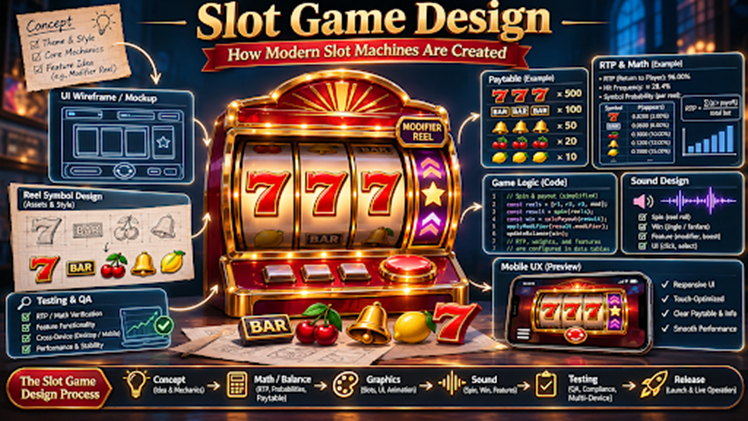
Slot game design combines mathematics, programming, graphics, and sound to create a working game. Developers must decide how the reels behave, which symbols appear, how payouts are calculated, and what happens during bonus rounds. Every element must work together. Modern slots range from simple three-reel machines to complex games with animated characters and multiple features. For example, the crazy 777 game real money version by TaDa Gaming uses a classic layout with an additional modifier reel. This shows how developers can add modern features to a classic slot design. Learning how slot games are built makes it easier to understand random results, visual effects, and gameplay. This guide explains the main development steps, game math, interface design, and testing.
Slot game design is the process of creating how a slot looks, sounds, and works. Designers plan the reels, symbols, winning combinations, rules, and bonus features. They also decide how players control the game. Programmers then turn these ideas into a working slot. Every part of the game must follow the same rules. The symbols on the screen must match the game rules, and all payouts must follow the approved math model.
The Main Elements of Slot Game Design
Every slot begins with a concept. Developers choose a theme, such as classic fruits, mythology, adventure, or science fiction. They then select the reel structure and decide how winning combinations will work. The mathematical model defines probabilities, payouts, RTP, and volatility. Graphics and animations communicate the results, while sound effects provide additional feedback. The user interface connects these elements. Players need clear controls for spinning, viewing rules, adjusting settings, and reading the paytable.
How Slot Games Are Designed: The Main Development Stages
Creating a slot game involves several stages. Developers normally start with a concept, build a mathematical model, create a prototype, and then add graphics and sound.
Development Stage
Main Task
Expected Result
Concept
Choose theme and gameplay idea
Game concept
Mathematics
Calculate RTP and probabilities
Mathematical model
Mechanics
Define reels and bonus features
Game rules
Graphics
Create symbols and backgrounds
Visual assets
Programming
Implement gameplay
Working prototype
Sound
Add music and effects
Audio assets
Testing
Check functionality and mathematics
Tested game
Release
Complete technical requirements
Finished product
From Idea to Game Concept
The first step is deciding what the game should look like and how it should work. A classic slot might use three reels with fruit symbols and a single payline. An adventure game could feature five reels, treasure symbols, and a bonus round. Designers also consider screen sizes, control placement, and how much information the player needs to understand. The concept should be realistic enough to develop within the project’s time and technical limits.
Building a Game Design Document
A game design document explains how the main parts of a slot should work. It usually covers the reel layout, symbols, paytable, bonus rules, game math, and interface. For example, it should explain which symbols a Wild can replace. It should also clearly state when a bonus feature starts. Clear rules help developers, artists, and testers work from the same plan.
Creating and Testing a Prototype
Before creating detailed graphics, developers can build a simple prototype with basic shapes and symbols. It may have three reels, a Spin button, a virtual balance, and a small paytable. The goal is to test the game rules and controls. Developers can check how the reels stop, how wins are detected, and how results appear on the screen. It is much easier to fix problems at this stage, before adding final graphics and animations.
Reel Layouts and Slot Machine Structures
The reel layout is one of the most recognizable parts of slot design. It determines how symbols are arranged and where winning combinations can appear.
Classic Three-Reel Slots
Traditional machines usually have three reels. Each reel displays symbols such as cherries, bells, BARs, or sevens. Some classic slots use a single horizontal payline. A win occurs when an eligible symbol combination appears across that line. Crazy 777 uses this type of structure. Its three main reels have one visible row and one payline, with an additional reel for special modifiers. A compact layout makes the basic rules easier to understand, but it can still support additional features.
Five-Reel Video Slots
Many modern video slots use five reels with three or more visible rows. These layouts can support different paylines, special symbols, and bonus mechanics. Some games use expanding reels or change the number of visible positions during a feature. More reels do not automatically mean a higher chance of winning. The actual probabilities depend on the mathematical model.
Paylines, Ways to Win, and Cluster Pays
Developers use different systems to identify winning combinations.
Payout System
How It Works
Paylines
Symbols match along predefined lines
Ways to win
Matching symbols appear on eligible adjacent reels
Cluster pays
Groups of connected matching symbols form wins
For example, a three-reel slot may pay when three BAR symbols appear on one payline. A ways-to-win game can pay for matching symbols on nearby reels, even if they are on different rows. A cluster game looks for groups of matching symbols that touch each other. Each system uses different rules and calculations.
Slot Game Mathematics: RNG, RTP, and Volatility
Mathematics determines how a slot operates. Artwork makes the game visually interesting, but the mathematical model defines the possible outcomes and their probabilities.
How Random Number Generators Work
Modern digital slots use random number generators, or RNGs, to produce randomized values. The game converts these values into outcomes according to its mathematical rules. This process determines which symbols or features appear. In a typical digital slot, the result is selected independently of the reel-spinning animation. The animation displays the outcome rather than physically determining it. Previous spins cannot reliably predict future results in an independently generated game.
What Is RTP in Slot Game Design?
Return to Player, or RTP, is the percentage of bets a game is expected to return over a very large number of rounds. For example, a slot with 96% RTP may return about $96 for every $100 wagered over time. This does not mean you will get exactly $96 back after betting $100. Your actual result can be higher or lower. Developers calculate RTP using the chance of each possible result and its payout. Bonus features are also included in this calculation.
Understanding Slot Volatility
Volatility describes how payouts vary in frequency and size. Low-volatility games generally produce smaller, more frequent payouts. High-volatility games may have longer periods without wins but offer larger potential payouts. Two games can have the same RTP and very different volatility. For example, one game might distribute much of its theoretical return through frequent small wins. Another might concentrate more of its return in rare bonus events.
Hit Frequency and Maximum Payout
Hit frequency shows how often a winning result may happen. For example, a 25% hit frequency means about one in four spins may win over a large number of spins. It does not mean that every fourth spin will be a winner. Maximum payout is the biggest prize the game can offer. A slot can have frequent wins, but those wins may be small. Another slot may win less often but offer a much larger top prize. Hit frequency and maximum payout measure different parts of how a slot works.
Crazy 777: A Practical Example of Slot Game Design
Crazy 777 by TaDa Gaming demonstrates how classic slot visuals can work with additional digital mechanics. The game uses three main reels, one fixed payline, and a separate modifier reel. Its symbols include traditional sevens and BARs, presented with bright lighting and retro styling.
Classic Visual Design and Simple Reel Structure
Crazy 777 uses a simple 3×1 layout with three symbols on one main payline. The symbols are easy to recognize, so the payout system is simple to understand. Players can quickly see if the reels form a winning combination. Glowing effects and an electronic soundtrack give the classic design a more modern look. The main reels stay simple, while the extra reel adds more variety to the results.
How the Extra Modifier Reel Works
The special reel sits to the right of the three main reels. It does not create normal payline wins. Instead, it can add a bonus when the main reels produce an eligible win. This bonus may be a multiplier, an extra prize, or respins. A multiplier increases the payout, while respins repeat the winning setup based on the game rules. This makes it easier to see the difference between the original win and the added bonus.
What Crazy 777 Teaches About Game Design
Crazy 777 shows that developers do not need a large reel grid to introduce additional gameplay mechanics. A single-payline design can remain visually simple while supporting multipliers and respins.
Feature
Crazy 777
Developer
TaDa Gaming
Theme
Classic, retro, lucky sevens
Main reels
3
Main layout
3×1
Paylines
1
Additional feature
Modifier reel
Special mechanics
Multipliers, respins, additional prizes
Reported volatility
Low to medium
Reported RTP options
96.01%–97.51%
Published data shows that the game can use different RTP settings, so there is no single RTP value for every version. The main point is that the game’s complexity comes from how its features work together, not from the number of reels or symbols.
Designing Slot Symbols and Paytables
Symbols are a central part of slot design. They must be visually recognizable and have clearly defined functions.
High-Value and Low-Value Symbols
Many slots divide regular symbols into groups with different payout values. High-value symbols may represent important characters or objects related to the game’s theme. Lower-value symbols often use simple shapes, card ranks, or familiar icons. Designers must ensure that symbols remain easy to distinguish, especially on mobile screens.
Wild and Scatter Symbols
Wild symbols commonly substitute for other symbols when forming winning combinations. Scatter symbols often activate special features or award payouts independently of normal paylines. However, their exact functions vary between games. A Wild may have restrictions, and a Scatter does not always trigger free spins. Every special symbol needs a clear explanation in the rules.
How Paytables Are Created
A paytable shows which symbol combinations pay and how much they are worth. For example, three matching BAR symbols might pay five times the bet. The real payout depends on how the game is designed. Developers set the paytable, win chances, and bonus features to achieve the planned theoretical RTP.
Slot Game Graphics, Themes, and Animation
Visual design helps players understand what is happening on the reels. Good graphics should support gameplay rather than make important information difficult to see.
Choosing a Slot Theme
Themes provide the visual identity of a game. Classic slots commonly use fruits, bells, and sevens. Mythology games may feature gods and legendary creatures, while adventure slots use explorers, maps, and treasure. A consistent theme influences symbols, backgrounds, colors, and music. However, the theme does not determine RTP or winning probabilities.
Creating Clear and Readable Symbols
Symbols should be easy to recognize at any size. Developers use clear shapes, simple details, and strong contrast to make each symbol stand out from the background. This is especially important on smartphones, where reel symbols can appear small. If two symbols look too similar, players may find it hard to understand which combinations have won.
Animations and Visual Feedback
Animations help explain what happens in the game. Reel movement shows each spin, while highlights mark winning symbols. Bonus animations show when a special feature starts. In Crazy 777, the animation should clearly connect the main winning combination with the modifier reel. Too many effects can make the game hard to follow. Important results should stay clear and visible without complex animations.
Sound Design in Slot Games
Sound contributes to the identity of a slot, but it also provides practical feedback. Developers use music and effects to distinguish ordinary actions from special events.
Background Music and Atmosphere
Background music should match the game’s visual theme. A fantasy slot might use orchestral music, while a retro game may use electronic sounds. Crazy 777 combines traditional symbols with a modern electronic soundtrack. Music should not interfere with important interface information.
Sound Effects for Game Events
Sound effects can identify reel spins, symbol matches, and bonus activations. Different events should have recognizable audio cues. For example, a bonus feature may use a separate sound from an ordinary payline result.
Sound Controls and Accessibility
Players should be able to adjust or mute audio. Important information must also remain available visually. A user should not need sound to understand whether a feature has been activated or what result occurred. Clear sound controls improve accessibility and usability across different devices.
Designing Bonus Features and Special Mechanics
Bonus features add additional rules to the basic slot structure. They must be included in the mathematical model and explained clearly to users.
Free Spins and Respins
Free spins award additional spins under specified conditions, generally without requiring a new wager for each awarded spin. Respins repeat part of the game process under special rules. Depending on the design, certain symbols or reels may remain fixed. These features are not interchangeable. Their behavior depends on the individual game.
Multipliers and Special Symbols
A multiplier increases an eligible payout by a defined factor. For example, a 3× multiplier applied to a $4 win would produce a $12 payout. Special symbols may also activate additional prizes or change the behavior of reels. The rules must specify when each effect applies and how several effects interact.
Feature Integration and Game Balance
Every bonus feature can change how often different results appear. Developers must include it when calculating the theoretical RTP, volatility, and hit frequency. Crazy 777 is a good example. Its modifier reel can add extra payouts to winning results on the main reel, while the basic single-payline system stays the same. This also makes the game logic easier to program. First, the game checks the main result. Then it applies the modifier if the result meets the required rules.
Mobile Slot Game Design and User Experience
Modern slot games often need to work across desktop computers, tablets, and smartphones. This requires more than shrinking the desktop interface.
Responsive Layouts and Screen Sizes
Responsive design adapts the game interface to different screen dimensions. A desktop slot may display the reels beside a large information panel. On mobile, these elements may need to be stacked or reorganized. Some games support both portrait and landscape orientations. Symbols, text, and controls should remain readable in either layout.
Buttons, Menus, and Navigation
Common controls include Spin, Bet, Paytable, Settings, and Help. Buttons should be large and easy to tap. They should also have enough space between them to prevent mistakes. Key details, such as the selected bet and game rules, should be easy to find. Controls should use the same labels and work in the same way on all devices.
Performance and Loading Speed
Detailed graphics and animations can make games load more slowly. Developers improve speed by compressing images, reusing files, and removing extra visual effects. Many browser games use HTML5 because it works well on modern websites and devices. Clean and efficient code also helps animations run smoothly, even on devices with less processing power.
Accessibility in Slot Interfaces
Accessible design makes a website easier to use for more people. Text should be easy to read, with clear contrast between text and the background. Users should also be able to adjust sound or reduce motion. Important information should not rely only on color or animation. The interface should avoid strong flashing effects. It should also clearly show when an action works or when an error happens.
How Developers Test Slot Games
Testing checks if the finished game works as planned. It covers game features, probabilities, graphics, and device compatibility.
Functional Testing
Functional testing checks whether buttons, menus, and gameplay features work correctly. Testers examine ordinary spins, bonus triggers, payout calculations, and error messages. They also verify what happens when a user loses connection or closes the game during a round.
Mathematical Testing
Mathematical testing checks whether the game works as planned. Developers run large simulations to study game results and compare them with the expected values. They also test the RNG and check how random numbers are turned into game outcomes. However, simulations are not enough on their own. Developers must also review the game’s calculations and software to make sure everything works correctly.
Compatibility and Performance Testing
A game should be tested across supported browsers, operating systems, and screen sizes. Developers examine loading times, animation performance, controls, and memory use. They also check that symbol positions and payout information remain correct after the interface changes size.
Regulatory Testing and Certification
Real-money slot games may need independent testing before they can be released. The rules depend on the country or market. Testing may check the random number generator, game math, software performance, and the information shown to players. In regulated markets, the final game must meet local technical standards. It is not enough to simply follow the developer’s original design.
Classic Slot Design vs. Modern Video Slot Design
Classic and modern slots often use different visual approaches, but they share the same need for accurate mathematics and clear rules.
Feature
Classic Slot Design
Modern Video Slot Design
Reel layout
Often 3 reels
Often 5 or more reels
Symbols
Fruits, BARs, sevens
Themed characters and objects
Graphics
Simple, retro
Detailed, animated
Bonus features
Often fewer
Frequently more varied
Sound
Basic effects
Themed music and effects
Interface
Simple controls
More settings and information
Mathematical structure
Varies
Varies
A modern slot is not always more complex than a classic one. Crazy 777 is a good example. It looks like a traditional fruit machine, but it also has a modifier reel that adds extra rules. The main difference between classic and modern slots is not always the number of features. It can also be how those features are shown and used.
Common Mistakes in Slot Game Design
A common mistake is making the interface too complex. Too many buttons, animations, and panels can make the game hard to understand. Symbols should also be easy to tell apart. Similar colors or shapes can make winning combinations difficult to see, especially on small mobile screens. Bonus features need clear explanations too. Players should know when a multiplier is active and which payout it affects. Too many animations can slow the game and hide important details. Small buttons, hard-to-read paytables, and missing sound controls also make the game less user-friendly. Poor technical testing can cause wrong payouts or software errors. Good design keeps the rules clear and easy to understand without relying on unnecessary visual effects.
How to Learn Slot Game Design
Beginners can learn slot development by studying how existing games work and building small practice projects. A simple prototype can show how coding, probability, and visual design work together.
Study Existing Slot Mechanics
Start by comparing several slot layouts. Examine a classic three-reel game and a modern five-reel slot. Identify how paylines work, which symbols have special functions, and how results are displayed. Crazy 777 is useful for studying the difference between ordinary reels and a separate modifier system. Focus on understanding the rules rather than the size of possible prizes.
Create a Simple Slot Prototype
A beginner can build a simple three-reel game with basic symbols and virtual credits. Start with a small paytable and a Spin button. Make the game choose random results and check for matching symbols. Then add a result display and simple animations. Test the basic version before adding complex visual effects. This helps show why the game rules and math should come first. For a learning project, virtual credits are enough. There is no need to add real-money payments.
Explore Game Design Tools
JavaScript and HTML5 are good for simple browser games and prototypes. Phaser is useful for making interactive 2D games. Godot includes scripting and visual development tools. Unity uses C# and supports many types of games. Beginners should choose a tool that matches their coding skills and target platform. Before starting, create a clear game design document that explains how the software should work.
Frequently Asked Questions About Slot Game Design
What Is Slot Game Design?
Slot game design is the process of creating the rules, visuals, sounds, and controls of a slot game. It also defines how the reels work, how wins are formed, and how bonus features behave. These details are planned before developers build the game in software.
How Are Online Slot Games Created?
Developers start with a game idea and a math model. They choose the reels, symbols, payouts, and bonus features. Next, they build a prototype and add graphics and sound. The game is then tested for performance, math accuracy, device compatibility, and any required legal standards.
What Determines Slot Machine Results?
Modern digital slots typically use random number generators and predefined mathematical rules. Random values are mapped to possible game outcomes. The reel animations display those outcomes but do not normally determine them. Previous independent spins cannot reliably predict future results.
What Is the Difference Between Slot Design and Slot Development?
Slot design sets the rules, look, and player experience. Slot development turns those ideas into working software. The two processes often overlap. Designers and developers may change features together during testing and improvement.
Is Crazy 777 a Classic Slot?
Crazy 777 by TaDa Gaming uses classic symbols, three main reels, and one payline. It also includes a separate modifier reel that can introduce multipliers, respins, and additional prizes. Its design combines traditional slot visuals with modern mechanics.
What Programming Languages Are Used for Slot Games?
JavaScript and TypeScript are common choices for browser-based games. Unity projects often use C#, while Godot supports GDScript and other languages. The best choice depends on the game’s technical requirements, development team, and target devices.
Can Beginners Create a Simple Slot Game?
Yes. Beginners can build educational slot prototypes with basic programming knowledge. A three-reel game with a small paytable, virtual credits, and simple animations is a practical starting point. Real-money functionality is not needed to study the underlying mechanics.
Conclusion
Slot game design combines math, coding, graphics, sound, and user experience. Each part has a clear job, from creating random results to showing them on the screen. Crazy 777 is a good example of how developers can add modern features to a classic three-reel format while keeping its simple look. Good slot design depends on clear rules, a solid math model, reliable software, and an interface that explains results clearly.