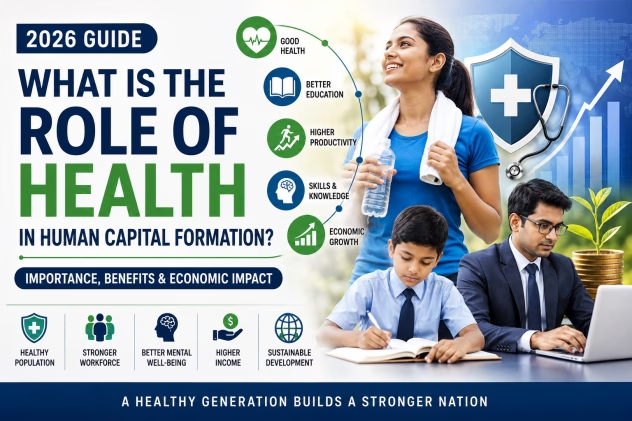
Health is one of the most valuable assets an individual can possess. A healthy population is more productive, learns more effectively, earns higher incomes, and contributes significantly to a country’s economic development. This is why health is considered a key component of human capital formation.
If you’ve ever wondered, “What is the role of health in human capital formation?”, the answer lies in the direct relationship between physical well-being, mental health, education, productivity, and economic growth. Investments in healthcare improve people’s ability to work, learn, innovate, and participate actively in society.
Human capital formation goes beyond formal education. It includes improving people’s knowledge, skills, experience, and overall health. Governments, businesses, and individuals all play a role in developing human capital by investing in quality healthcare, education, nutrition, sanitation, and social welfare.
In this guide, you’ll learn how health contributes to human capital formation, why it is essential for economic development, its long-term benefits, challenges, and practical examples from around the world.
What Is Human Capital Formation?
Human capital formation refers to the process of improving the quality, knowledge, skills, abilities, and health of people so they can contribute more effectively to society and the economy.
Unlike physical capital such as machinery or buildings, human capital focuses on people and their potential to generate economic value.
Human capital formation involves investments in:
- Education
- Healthcare
- Skill development
- Vocational training
- Nutrition
- Research and innovation
- Professional experience
- Technology adoption
The ultimate goal is to create a productive, knowledgeable, and healthy workforce capable of supporting long-term economic growth.
What Is the Role of Health in Human Capital Formation?
Health plays a central role in human capital formation because healthy individuals are more capable of learning, working, and contributing to economic activities. Good health improves both physical and mental abilities, enabling people to develop skills and apply them effectively.
When governments and individuals invest in healthcare, they are investing in future productivity and national development.
Some key roles of health in human capital formation include:
- Improving learning capacity
- Increasing labor productivity
- Reducing absenteeism
- Extending working life
- Supporting innovation
- Enhancing mental performance
- Lowering healthcare costs over time
- Strengthening economic growth
Healthy individuals are better equipped to acquire education, complete training programs, and maintain consistent employment throughout their careers.
Why Health Is an Essential Investment
Healthcare should not be viewed only as an expense. Instead, economists consider it an investment because it generates long-term economic returns.
A healthier population contributes by:
- Producing more goods and services
- Paying higher taxes due to increased earnings
- Reducing dependency on welfare programs
- Supporting innovation and entrepreneurship
- Improving overall national productivity
Countries with strong healthcare systems generally experience higher levels of economic development because their workforce remains healthier and more productive.
Relationship Between Health and Education
Education and health are closely connected.
Healthy students:
- Attend school regularly
- Concentrate better during lessons
- Learn faster
- Perform well in examinations
- Complete higher levels of education
On the other hand, poor health can interrupt learning through frequent illness, malnutrition, or mental health challenges.
Health vs. Educational Outcomes
| Health Condition | Impact on Education |
|---|---|
| Good nutrition | Better concentration and memory |
| Regular healthcare | Fewer school absences |
| Good mental health | Improved academic performance |
| Vaccinations | Reduced disease outbreaks |
| Physical fitness | Increased classroom participation |
| Poor health | Lower educational achievement |
This strong connection shows why investment in health supports educational success and ultimately strengthens human capital formation.
How Good Health Improves Productivity
One of the biggest contributions of health to human capital formation is increased productivity.
Healthy workers are generally more efficient because they have:
- Higher energy levels
- Better concentration
- Greater physical endurance
- Improved decision-making abilities
- Lower stress levels
- Stronger teamwork skills
Employers also benefit from a healthier workforce through reduced absenteeism, lower medical costs, and higher overall performance.
Examples of Productivity Benefits
- Factory workers produce more with fewer sick days.
- Teachers deliver higher-quality education when they remain healthy.
- Healthcare professionals provide better patient care.
- Software developers maintain focus during long working hours.
- Entrepreneurs manage businesses more effectively.
As productivity rises, businesses become more competitive, creating additional employment opportunities and boosting national income.
The Importance of Nutrition in Human Capital Formation
Nutrition is one of the foundations of good health.
Children who receive balanced nutrition are more likely to:
- Develop healthy brains
- Improve cognitive abilities
- Learn efficiently
- Grow physically
- Build stronger immune systems
Adults with proper nutrition also experience:
- Increased workplace productivity
- Better physical strength
- Improved mental health
- Reduced chronic diseases
- Longer working lives
Governments often invest in nutrition programs because they produce long-term economic benefits through healthier future generations.
Mental Health and Human Capital Development
Modern human capital formation extends beyond physical health. Mental health has become equally important in today’s knowledge-based economy.
Positive mental health helps individuals:
- Think creatively
- Solve complex problems
- Adapt to change
- Communicate effectively
- Build strong professional relationships
- Maintain motivation
Poor mental health, however, can reduce productivity, increase absenteeism, and limit educational achievement.
Organizations worldwide are increasingly investing in employee wellness programs, counseling services, and work-life balance initiatives to strengthen human capital.
Economic Importance of Health in Human Capital Formation
Health is one of the strongest drivers of economic development because it directly influences the productivity and efficiency of the workforce. A healthy population contributes more effectively to industries, businesses, and public services, leading to sustainable economic growth.
When people are healthy, they can:
- Work longer hours efficiently
- Learn new skills more quickly
- Adapt to changing technologies
- Earn higher incomes
- Save more for the future
- Contribute to national development
In contrast, poor health reduces productivity, increases healthcare costs, and slows economic progress.
How Government Investment in Healthcare Supports Human Capital Formation
Governments play a vital role in strengthening human capital by investing in healthcare infrastructure and public health programs. These investments improve the overall quality of life while creating a healthier and more productive workforce.
Common Government Investments
- Public hospitals and clinics
- Vaccination programs
- Maternal and child healthcare
- School health services
- Health insurance schemes
- Nutrition programs
- Mental health awareness campaigns
- Disease prevention initiatives
Such investments reduce illness, improve life expectancy, and help citizens participate more actively in education and employment.
Role of Preventive Healthcare in Human Capital Formation
Preventive healthcare focuses on stopping diseases before they occur rather than treating them later.
Examples include:
- Regular health check-ups
- Immunization programs
- Health education
- Balanced nutrition
- Physical exercise
- Clean drinking water
- Proper sanitation
Benefits of Preventive Healthcare
| Preventive Measure | Benefit to Human Capital |
|---|---|
| Vaccination | Reduces infectious diseases |
| Regular medical check-ups | Early disease detection |
| Healthy diet | Better physical and mental development |
| Exercise | Improved fitness and productivity |
| Safe sanitation | Lower disease transmission |
| Health awareness | Better lifestyle choices |
Preventive healthcare lowers long-term medical costs while improving workforce productivity.
Challenges Affecting Health in Human Capital Formation
Despite its importance, several challenges limit the role of health in developing human capital.
1. Limited Access to Healthcare
Many people, especially in rural and underserved areas, struggle to access quality medical services.
Common barriers include:
- Shortage of hospitals
- Lack of doctors
- High treatment costs
- Poor transportation
- Limited health insurance
2. Malnutrition
Poor nutrition remains a major obstacle to human capital formation.
Malnutrition can cause:
- Slow physical growth
- Poor brain development
- Weak immunity
- Reduced learning ability
- Lower workplace productivity
Children affected by malnutrition often face long-term educational and economic disadvantages.
3. Communicable Diseases
Diseases such as malaria, tuberculosis, dengue, and influenza can reduce workforce participation and increase healthcare expenses.
Frequent illness results in:
- Higher absenteeism
- Lower productivity
- Reduced family income
- Greater pressure on healthcare systems
4. Mental Health Issues
Mental health challenges have become increasingly significant worldwide.
Common issues include:
- Stress
- Anxiety
- Depression
- Burnout
These conditions affect learning, creativity, teamwork, and decision-making, reducing overall human capital development.
5. Healthcare Inequality
Access to healthcare often varies based on income, geography, and social conditions.
Unequal healthcare services can widen educational and economic gaps, limiting opportunities for many individuals to reach their full potential.
Real-Life Examples of Health Supporting Human Capital Formation
Health investments have transformed economies around the world.
School Health Programs
Many countries provide:
- Free vaccinations
- School meals
- Regular health check-ups
These programs improve attendance, concentration, and academic performance.
Workplace Wellness Programs
Many organizations now offer:
- Health insurance
- Fitness memberships
- Mental health counseling
- Regular medical screenings
These initiatives reduce absenteeism and improve employee productivity.
Public Health Campaigns
Government campaigns promoting hygiene, sanitation, and disease prevention have helped reduce illness and improve life expectancy, strengthening national human capital.
Advantages of Good Health in Human Capital Formation
Health provides benefits for individuals, businesses, and society.
Advantages
| Advantage | Description |
|---|---|
| Better Education | Healthy students learn more effectively. |
| Higher Productivity | Workers perform tasks efficiently. |
| Increased Earnings | Healthy individuals often earn higher incomes. |
| Longer Working Life | Good health extends productive years. |
| Lower Medical Costs | Preventive care reduces treatment expenses. |
| Economic Growth | Productive workers strengthen the economy. |
| Innovation | Healthy minds support creativity and problem-solving. |
| Improved Quality of Life | Better health leads to greater overall well-being. |
Limitations and Challenges
While investing in health has many benefits, certain obstacles can slow progress.
| Challenge | Impact |
|---|---|
| High healthcare costs | Limits access for low-income families |
| Rural healthcare shortages | Reduces treatment availability |
| Poor nutrition | Slows physical and cognitive development |
| Disease outbreaks | Disrupts education and employment |
| Mental health stigma | Prevents people from seeking support |
| Healthcare inequality | Creates unequal opportunities |
Addressing these challenges requires coordinated efforts from governments, healthcare providers, educational institutions, businesses, and communities.
Long-Term Impact of Health on Economic Development
Health contributes to long-term economic progress in several ways.
A healthier population:
- Produces more goods and services.
- Pays higher taxes through increased earnings.
- Attracts investment by creating a reliable workforce.
- Reduces pressure on public healthcare systems.
- Supports innovation and entrepreneurship.
- Improves national competitiveness in the global economy.
Countries that consistently invest in healthcare often experience stronger economic growth and higher living standards over time.
Role of Technology in Improving Health and Human Capital
Technology is transforming healthcare and strengthening human capital formation.
Modern healthcare technologies include:
- Telemedicine services
- Electronic health records
- AI-assisted diagnosis
- Wearable health devices
- Online medical consultations
- Mobile health applications
- Remote patient monitoring
These innovations improve access to healthcare, especially in remote areas, and help people maintain healthier lifestyles.
Future of Health in Human Capital Formation
As the world becomes increasingly knowledge-driven and technology-oriented, the role of health in human capital formation will continue to expand. Countries are recognizing that investing in healthcare is just as important as investing in education and infrastructure.
Several emerging trends are shaping the future of human capital development:
- Greater use of artificial intelligence (AI) in healthcare
- Expansion of telemedicine and digital health services
- Increased focus on mental health and well-being
- Personalized healthcare based on individual needs
- Preventive healthcare programs
- Better nutrition awareness
- Universal health coverage initiatives
- Workplace wellness and employee assistance programs
Governments, educational institutions, and businesses that prioritize these areas will be better equipped to build a skilled, productive, and healthy workforce.
How Individuals Can Contribute to Human Capital Formation Through Health
Human capital formation is not only the responsibility of governments and organizations. Individuals also play an important role by maintaining healthy lifestyles and continuously improving their skills.
Practical Steps Individuals Can Take
- Eat a balanced and nutritious diet.
- Exercise regularly.
- Get adequate sleep every day.
- Attend routine medical check-ups.
- Stay up to date with vaccinations.
- Practice good hygiene.
- Manage stress effectively.
- Prioritize mental health.
- Continue learning and developing new skills.
- Avoid harmful habits such as smoking and excessive alcohol consumption.
Healthy habits improve personal well-being while increasing educational achievement and workplace productivity.
Importance of Public Health Policies
Effective public health policies create the foundation for strong human capital formation.
Examples include:
- Free or affordable healthcare services
- School vaccination programs
- Maternal and child healthcare
- Nutrition assistance programs
- Clean drinking water projects
- Sanitation improvements
- Health awareness campaigns
- Disease prevention initiatives
These policies help reduce illness, improve life expectancy, and increase workforce participation.
Health vs. Education in Human Capital Formation
Health and education are often described as the two pillars of human capital. Rather than competing, they complement one another.
| Aspect | Health | Education |
|---|---|---|
| Primary Purpose | Improves physical and mental well-being | Develops knowledge and skills |
| Main Benefit | Better productivity and longer working life | Better employment opportunities |
| Economic Impact | Reduces healthcare costs and increases labor efficiency | Increases innovation and earning potential |
| Long-Term Contribution | Healthy workforce | Skilled workforce |
| Combined Effect | Stronger and more productive human capital | Sustainable economic development |
The greatest results are achieved when both health and education receive equal attention.
Frequently Asked Questions
What is human capital formation?
Human capital formation is the process of improving people’s knowledge, skills, experience, education, and health to increase their productivity and contribute to economic development.
What is the role of health in human capital formation?
Health improves learning ability, productivity, efficiency, creativity, and overall work performance. Healthy individuals are better able to acquire skills, complete education, and contribute to economic growth.
Why is health considered an investment?
Health is considered an investment because spending on healthcare increases productivity, extends working life, reduces medical costs, and generates long-term economic benefits for individuals and society.
How does good health improve education?
Healthy students attend school more regularly, concentrate better, retain information more effectively, and achieve higher academic performance than students affected by illness or malnutrition.
How does health influence economic growth?
A healthy workforce is more productive, earns higher incomes, supports innovation, and contributes to increased national output, which strengthens overall economic growth.
What are the major challenges to health in human capital formation?
Some common challenges include:
- Poor healthcare access
- Malnutrition
- Communicable diseases
- Mental health issues
- Healthcare inequality
- Rising medical costs
Addressing these challenges is essential for sustainable development.
Final Thoughts
Understanding what is the role of health in human capital formation is essential for students, policymakers, business leaders, and individuals alike. Health is not merely the absence of disease—it is a valuable economic resource that enables people to learn, work, innovate, and improve their quality of life.
A healthy population forms the backbone of every successful nation. When governments invest in healthcare, nutrition, sanitation, and disease prevention, they strengthen the country’s human capital and create opportunities for long-term prosperity. Likewise, individuals who prioritize their physical and mental well-being are better equipped to achieve educational success and career growth.
As technology continues to transform healthcare, the connection between health and human capital formation will become even more significant. Building a healthier society today lays the foundation for a more productive and sustainable future.